
OCCASIONAL PAPERS
December 20, 2025
The 2026 budget statement, tabled by the government on November 13, 2025, has thetheme “Resetting for Growth, Jobs, and Economic Transformation.” According to thegovernment, the core policy objectives are to consolidate macroeconomic stability,accelerate economic transformation and job creation, and strengthen national security and the social sectors to promote inclusive growth.
November 5, 2025
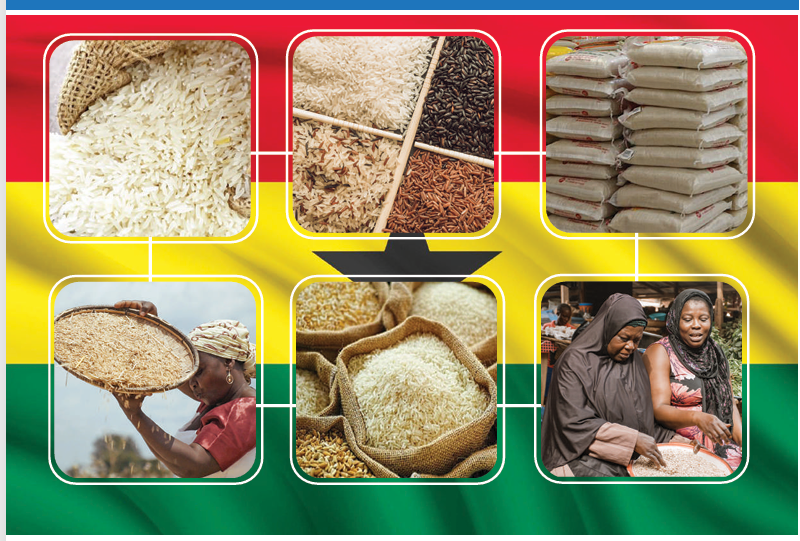
Importation of rice has been a serious issue of concern for the government of Ghana since the 1960s, due to its balance of payments, exchange rate, and food security implications. Therefore, over the years, the government has pursued a number of strategies to stem it. Yet, not only do data reveal that the strategies have failed to curtail it, they also reveal that rice importation has accelerated in recent years, making it assume alarming proportions. This is because, even though the government is generally aware of the challenges facing the country’s rice sector, we find in this paper that the […]
January 5, 2022
Ghana has been facing a very difficult fiscal situation for quite some time. Since 2012, the country has run large fiscal deficits, which have led to rapid debt build-up. The ratio of public debt to GDP, which stood at less than 29.1% in 2011, climbed swiftly to 55.6% in 2016. This led to a sharp increase in interest expenditure from 13.2% of total revenue and grants in 2011 to 35.8% in 2016.In 2017–2019, the officially declared budget deficit fell to an average of 4.4% of GDP from an average of 6.5% of GDP in 2013–2016. However, in addition to the […]
August 23, 2021
The government of Ghana has implemented extensive tax and non-tax policy and administration reforms over the years. Starting from 1983, these reforms have largely been carried out under the auspices of the IMF and the World Bank. However, using a sample of 35 countries in the developing world, we find in this paper that, relative to GDP, Ghana’s total public sector revenue has performed very poorly, compared with those of its peers, confirming findings of other studies. The government of Ghana has often blamed the country’s poor revenue performance on the difficulty in taxing the large informal sector, the generous […]
February 10, 2021
The government of Ghana has long complained about the growth of the public sector compensation bill. It has therefore adopted different policy measures over the years to address this phenomenon. However, these policies have not had a lasting impact on the compensation bill growth. Data therefore reveal that the size of the country’s compensation bill as a ratio of total revenue/expenditure has reached alarming proportions in recent years, despite having seen strong declines in the 1980s. We find that the compensation bill is currently posing serious fiscal and macroeconomic difficulties for the country. Although a few studies have been carried […]
February 10, 2021
Exchange Rate Instability In Ghana: The Causes And Remedies [Occasional Paper No. 20]